Runway Neighborhood Construction and the Future of Affordable Housing in Breckenridge
Breckenridge, Colorado—a picturesque ski town nestled in the Rockies—has long grappled with a housing crisis that threatens its vibrant community. With skyrocketing real estate prices driven by tourism and second-home buyers, local workers, from ski instructors to restaurant staff, have struggled to find affordable places to live. Enter the Runway Neighborhood: a major construction project transforming 24 acres of town-owned land off Airport Road, just behind addresses like 1760 Airport Rd. This development isn't just about building homes; it's a comprehensive effort to foster a sustainable, attainable community for the town's backbone—the workforce. Drawing from extensive research into public records, town documents, and local news, this post dives deep into every aspect of the project, from its origins to its potential ripple effects on the environment, economy, and everyday life in Breckenridge.
The History and Background of the Runway Neighborhood
The seeds of the Runway Neighborhood were planted amid Breckenridge's ongoing battle with housing affordability, an issue that has intensified over the past decade in Colorado's resort towns. The project site, a roughly 20-24-acre parcel (sources vary slightly, but town planning documents confirm 24 acres), was previously used as a free skier parking lot for Breckenridge Ski Resort and a popular sledding hill. This land, owned by the Town of Breckenridge, represents one of the last major undeveloped parcels under municipal control, making the development a "last-of-its-kind" opportunity for town-led affordable housing.
Planning began in earnest around 2024, with initial concepts presented to the Breckenridge Town Council in May of that year. The project was dubbed "Runway" due to its location along Airport Road, evoking the area's flat, open terrain reminiscent of an airstrip. Early discussions focused on addressing the workforce housing shortage, where median home prices in Breckenridge exceed $1 million, far outpacing local wages. By November 2024, concepts had evolved to include around 100 units, but economic headwinds—like rising construction costs and interest rates—prompted revisions.
A key milestone was a land swap with the Summit School District in February 2025, where the town exchanged 35 housing units for a 10-acre parcel (Tract 7 on the McCain Property) to relocate the skier parking. This cleared the way for development while preserving resort access. The master plan was officially adopted by Town Council on May 13, 2025, after months of reviews by the Planning Commission and equity committees. Groundbreaking occurred on August 12, 2025, marking the shift from planning to action.
This project builds on Breckenridge's history of workforce housing initiatives, such as the Alta Verde (172 units, net-zero, completed in 2023) and Larkspur (52 modular units). However, Runway stands out as the largest town-led for-sale development, aimed at first-time homebuyers and locals seeking deed-restricted properties to prevent speculative flipping.
Need a Professional Workspace While House-Hunting or Moving to Breckenridge?
If you're exploring the Runway Neighborhood or other housing options in Breckenridge, you'll also need a reliable place to work while you settle in. Whether you're a local worker, a remote professional relocating, or visiting for housing searches and site visits, Breckworks offers exactly what you need:
- Gigabit internet with cellular backup — stay productive even during mountain weather or outages.
- Free on-site parking — skip the hassle of limited street parking or paid lots near new developments.
- Professional environment — ergonomic desks, external monitors, quiet focus areas, and meeting rooms (no more working from noisy rentals or hotel lobbies).
- Convenient 8am–5pm hours right off Airport Road, close to the Runway site and other north-end developments.
Many people moving to or working in Breckenridge find that a dedicated coworking space makes the transition smoother — especially when juggling house tours, new jobs, and family life.
Book flexible workspace while house-hunting →
Explore private offices for long-term locals & remote workers →
See all our amenities and benefits →
What's Being Built: A Diverse, Attainable Community
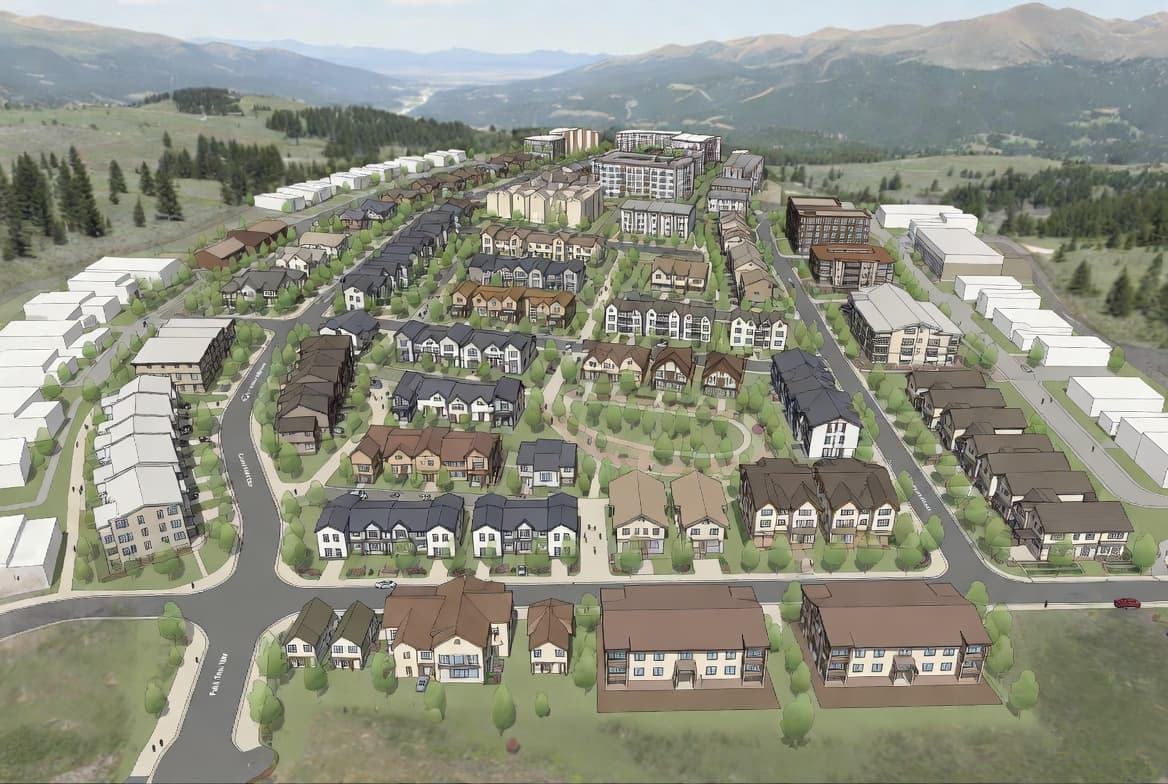
At its core, Runway Neighborhood is designed as a mixed-use residential enclave prioritizing affordability and sustainability. The full vision outlined in the master plan calls for up to 148 deed-restricted workforce housing units across 24 acres, including single-family homes, duplexes, townhomes, and cottages. Due to financial constraints, the town committed to Phase 1 with 81 units, deferring a second phase indefinitely.
The housing mix includes:
Single-family homes: 61 planned (though scaled in Phase 1), with options for accessory dwelling units (ADUs).
Duplexes: 42 units, offering shared-wall efficiency.
Townhomes: 45 units, ideal for families.
Cottages and ADUs: Up to 44 additional ADUs, with a recent compromise adding 10 fully built ADUs (at ~$245,000 each) and 10 "shells" (unfinished structures at ~$82,000 each) across 27 single-family lots. Seven lots will have no ADU provisions.
Amenities emphasize community: gathering spaces, playgrounds, and direct access to the Blue River Recreation Path for biking and walking. The layout spans from near Breckenridge Terrace Apartments to the Ullr Neighborhood, integrating with existing infrastructure like Upper Blue Elementary School. Units are capped at prices from $351,000 to $742,000, targeting households at 100% of the area median income (AMI), making them truly "attainable" compared to market rates.
Timeline and Progress So Far
Runway's timeline reflects careful planning amid economic volatility:
2024: Initial concepts and public discussions; site identified as former parking lot.
Early 2025: Master plan adoption (May 13); land swap finalized.
Mid-2025: Equity reviews and unit scaling to 81 for Phase 1; groundbreaking on August 12.
Ongoing (2026): Vertical construction budgeting (preliminary approval September 2025, final in January 2026); ADU decisions finalized in January 2026.
Future Milestones: Units ready for occupancy by winter 2027-2028; lottery for buyers and deed restrictions to be detailed in upcoming sessions.
Progress includes land preparation, with the new skier parking lot (500 spots on Tract 7) opening for the 2025-26 season. A financial feasibility study guided the phase reduction, ensuring viability.
Key Players and Companies Involved
The Town of Breckenridge leads the project through its Housing Department, with oversight from Town Council and Planning Commission. Key figures include Housing Manager Laurie Best and council members like Jay Beckerman, who have championed updates.
Developer: Neighborhood Crafters LLC, led by Suzanne Allen Sabo, handling construction and bidding (e.g., for ADUs). They receive a ~7% developer fee on the ~$150 million total project.
Partners: Summit School District (land swap for staff housing); Breckenridge Ski Resort (transit for new parking); Colorado Mountain College (overflow parking).
Consultants: Equity committees reviewed attainability; no specific architects named, but designs align with town sustainability goals.
The town retains land ownership until milestones are met, allowing reclamation if issues arise.
Financial Aspects: Subsidies, Costs, and Funding
Runway is a significant investment, with original estimates at $150 million. Phase 1 requires a $33-34 million town subsidy to keep units affordable. The 2026 town budget allocates $12.3 million for the project, part of a $148.8 million overall spending plan.
Breakdowns:
ADUs: Full build-out for 27 units would cost $4.4 million; the compromise (10 full, 10 shells) totals ~$3.27 million.
Unit Pricing: Deed-restricted to prevent resale profits, with subsidies bridging market costs.
Funding Sources: Town housing funds, potential buy-downs ($12 million unspecified in 2026 budget), and voter-approved measures like Summit County's 2008 Measure 1A for community needs.
Economic uncertainty led to phasing, but the town views it as essential for long-term workforce retention.
Technical and Design Details
Runway prioritizes innovation:
Net-Zero Energy: Fully electric homes with heat pumps, geothermal systems, and solar panels to offset all energy use—no fossil fuels, reducing greenhouse gases.
Sustainability Features: Efficient construction methods; integration with rec paths for low-car dependency.
Density and Layout: Mixed types to fit varied needs; community spaces to foster neighborhood bonds.
Infrastructure: Underground parking in some areas; no major technical hurdles noted beyond standard reviews.
Environmental Considerations and Impacts
Breckenridge's commitment to sustainability shines in Runway. The project is designed as net-zero, one of few nationwide focused on zero emissions, following the town's Alta Verde precedent. No formal environmental impact study (EIS) is detailed in public records, but the master plan includes drainage improvements to protect areas like Cucumber Gulch Preserve.
Impacts:
Positive: Reduces carbon footprint through renewables; preserves open spaces (e.g., Blue River corridor) and promotes walkable design, minimizing vehicle emissions.
Negative: Development on vacant land could increase runoff or habitat fragmentation. Traffic on Airport Road may rise, potentially affecting air quality. However, the site's prior use as parking limits new ecological disruption.
The town conducted financial and feasibility studies, but deeper environmental assessments may occur during permitting.
Impact on Local Wildlife, the Ski Resort, and Surrounding Areas
Wildlife in the area includes elk, deer, and birds along the Blue River. While no specific studies mention direct impacts, the project's rec path connectivity could enhance wildlife corridors if designed with buffers. Urban expansion might displace animals, but net-zero features mitigate broader climate effects beneficial to ecosystems.
For Breckenridge Ski Resort, the biggest change is relocating free parking from the 1,000-spot Airport Road lot to a 500-spot site 5 miles north on the McCain Property. The resort provides free bus service, but reduced capacity could strain peak days (e.g., during events). Overflow at Colorado Mountain College adds ~240 spots. Overall, it maintains access but may inconvenience day-skiers.
Nearby neighborhoods like Ullr and Breckenridge Terrace may see increased density and traffic, potentially straining emergency services and evacuation routes along Highway 9. Residents have voiced concerns about losing the "small-town feel."
Broader Impacts on the Town, Neighborhoods, People, and Tourism
Runway promises transformative benefits:
On the Town: Bolsters workforce retention, supporting local businesses and schools. It could stabilize the economy by keeping dollars local, but adds pressure on infrastructure like roads and utilities.
On Neighborhoods and People: Provides homeownership for ~81 households initially, targeting AMI 100% earners. However, increased population may raise living costs indirectly. Equity reviews ensure inclusivity, but some officials worry about attainability.
On Tourism: Enhances sustainability appeal, attracting eco-conscious visitors. Relocated parking might deter some skiers, but improved workforce housing ensures better service at resorts and shops. Long-term, it could boost year-round tourism by fostering a stable community.
Potential downsides include overdevelopment perceptions and traffic congestion on Airport Road, impacting daily commutes.
Future Outlook for the Project
Phase 1 completion by 2027-2028 will deliver 81 units, with potential for Phase 2 if economics improve. The town envisions Runway as a model for net-zero communities, possibly inspiring similar projects elsewhere. Deed restrictions will cap appreciation, preserving affordability. A planned daycare and community spaces suggest a self-sustaining neighborhood. If successful, it could pave the way for more buy-downs or partnerships, though officials call it the "last" major town-built effort.
How Locals Can Get Involved
Breckenridge encourages community input to keep Runway aligned with local needs. Attend Town Council meetings (e.g., budget approvals in January) or public hearings. Contact the Housing Department at tobhousing@townofbreckenridge.com for lottery details or feedback. Join equity committees or follow updates on the town's website. Advocacy can ensure environmental safeguards, fair pricing, and minimal disruptions—volunteer for monitoring traffic or wildlife impacts. Staying engaged helps the project benefit society, from workforce stability to sustainable growth.
In summary, the Runway Neighborhood represents Breckenridge's proactive stance on housing and sustainability. While challenges like costs and impacts loom, its potential to strengthen the community is immense. For curious locals or visitors, this project underscores the delicate balance of preserving a mountain town's charm while adapting to growth.
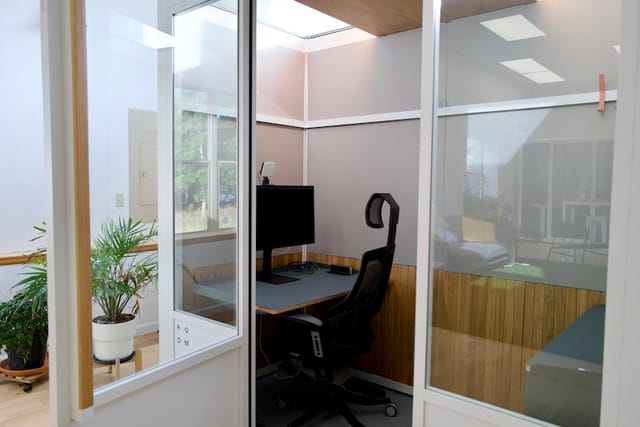
Looking for a place to work while in Breckenridge?
Reserve your coworking space in Breckenridge. Available on-demand. Equipped with high speed internet, external monitors, zoom cameras, sit-stand desks, ergonomic chairs, and coffee! Breckworks is a 5-star experience you would not find anywhere else.